

What if the best way to understand a culture was to cook it?
In Fes, food is one of the most intimate ways to discover the city’s history. Recipes tell stories of families, communities and generations, while ingredients reveal the connection between the kitchen and the markets of the Medina.
For Jewish Moroccan communities, food has also played an important role in preserving heritage.
Rosh Hashanah, the Jewish New Year, is a wonderful example.
Its festive table brings together symbolic ingredients, traditional recipes and family customs — creating a culinary experience where every dish can carry a meaning.
At Fez Cooking School, this relationship between food, culture and storytelling is at the heart of the experience.
Rosh Hashanah Begins at the Table
Rosh Hashanah is a celebration of renewal and the beginning of a new Jewish year.
One of its most distinctive culinary traditions is the use of symbolic foods, or simanim. Families may recite blessings over particular fruits and vegetables, expressing wishes for prosperity, sweetness and protection in the year ahead.
The exact customs vary between communities.
In Moroccan Jewish traditions, however, the flavours of Morocco naturally become part of the celebration.
Dates, pomegranates, vegetables, dried fruits, nuts and aromatic spices can all contribute to a festive table filled with colour and symbolism.
The Moroccan Jewish Pantry
To understand Sephardic cooking in Morocco, start with the pantry.
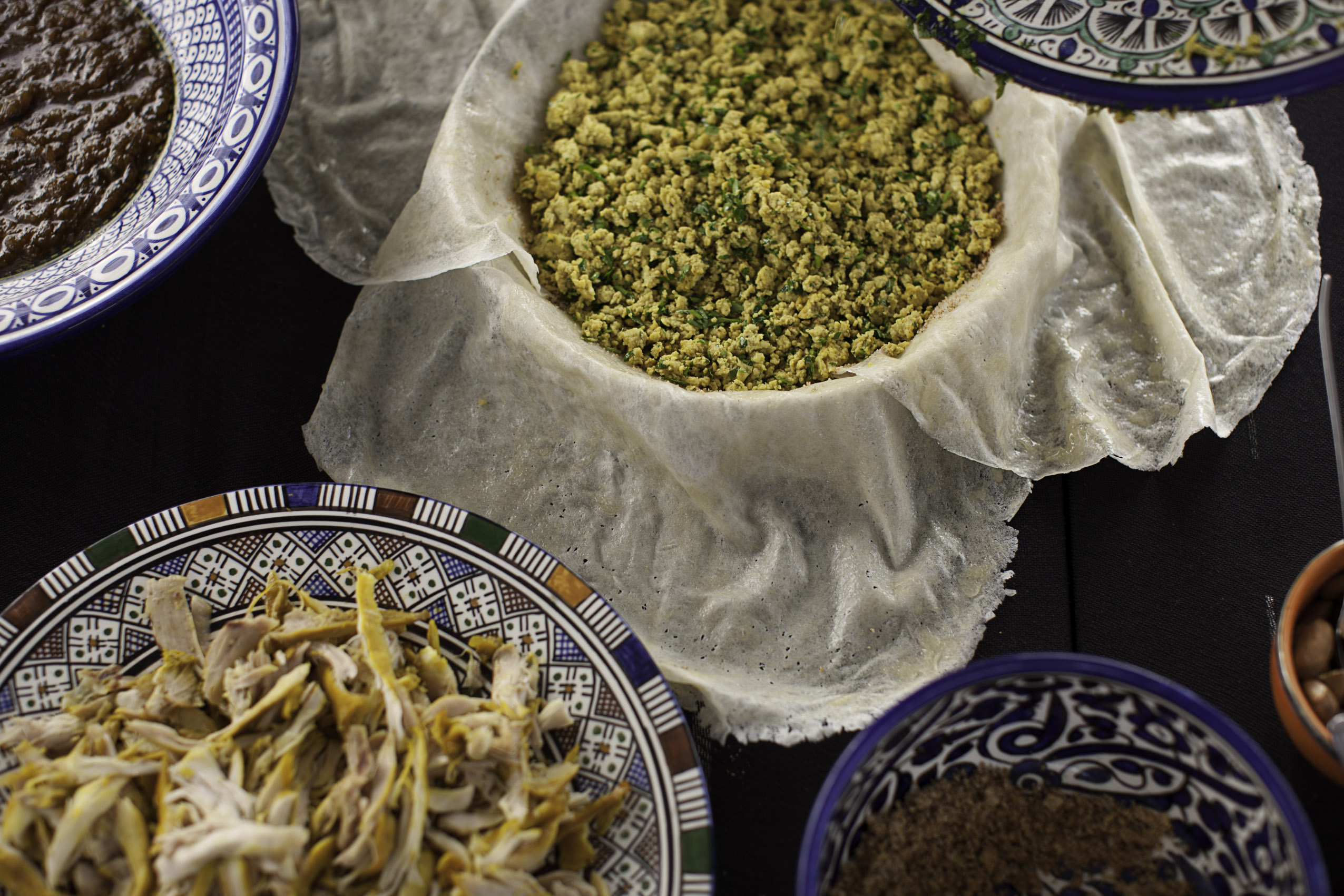
Imagine opening a Moroccan kitchen cupboard and finding cinnamon, ginger, saffron, cumin and paprika alongside olive oil, almonds, dried fruits and preserved ingredients.
People can also find these flavours within Moroccan Jewish culinary traditions.
What makes the cuisine fascinating is the way these ingredients can be transformed.
A dish might combine sweet and savoury flavours.
Fruit might accompany meat or poultry.
Vegetables can become richly spiced salads or slow-cooked dishes.
Couscous can become a generous communal meal.
And simple ingredients can be transformed into dishes worthy of a celebration.
The Sweet-and-Savoury Soul of Moroccan Cuisine
One of the defining characteristics of Moroccan cooking is its ability to balance contrasting flavours.
Sweetness can meet spice.
Fruit can meet savoury ingredients.
Crisp textures can contrast with slow-cooked dishes.
This is particularly relevant when talking about Rosh Hashanah.
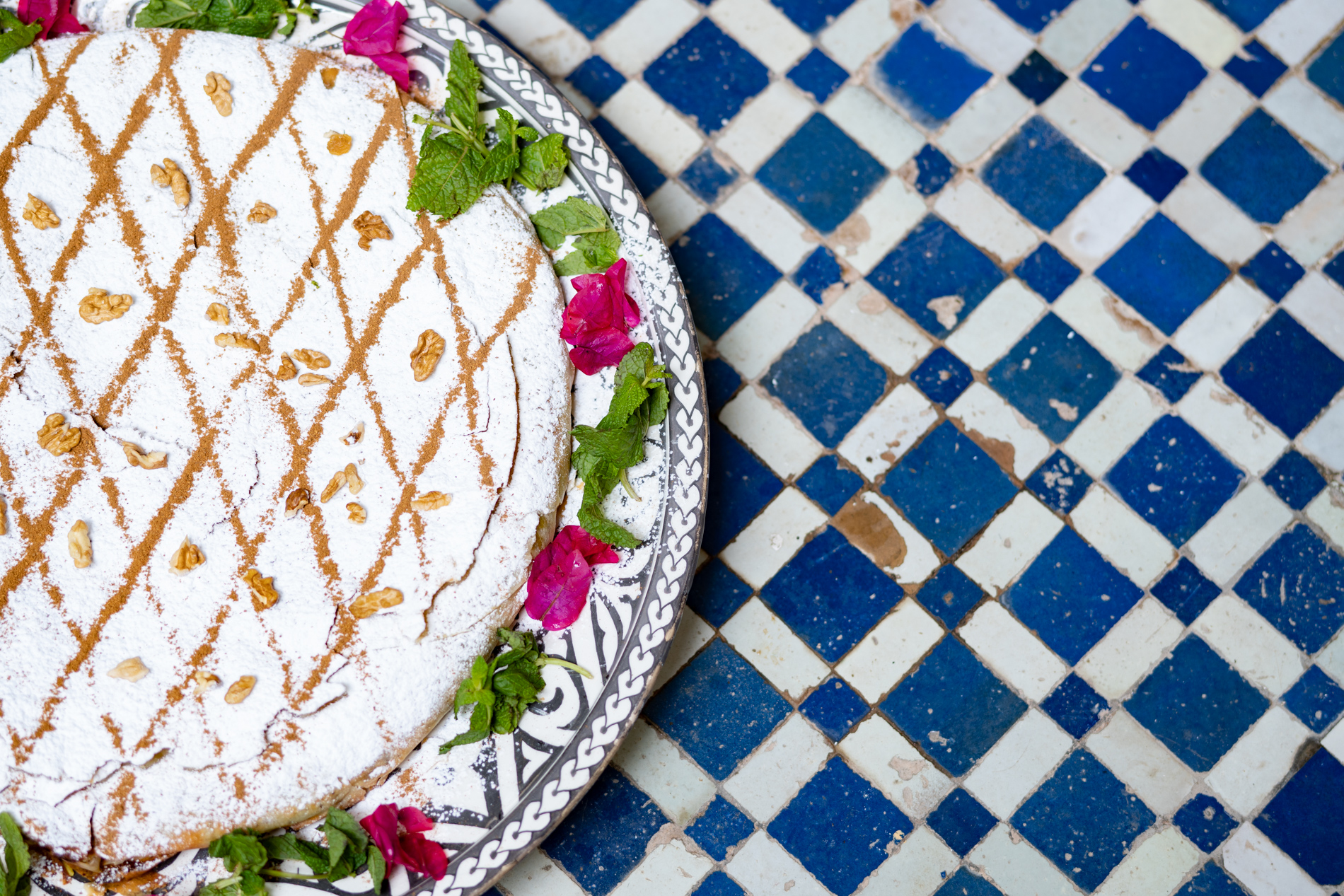
The wish for a sweet year naturally lends itself to ingredients such as honey, dates and dried fruits, while Moroccan culinary traditions provide an extraordinary vocabulary of spices and textures with which to work.
The result is food that is deeply connected to its place and rich in symbolism.
Learning Moroccan Cuisine in the Medina
There is something very different about learning to cook Moroccan food in Fes rather than simply reading a recipe.
The experience begins outside the kitchen.
At Fez Cooking School, cooking workshops can include a visit to the souks with the chef, where guests discover ingredients and local food culture before returning for a hands-on cooking experience. The school describes the experience as a cultural exchange that goes beyond simply following a list of ingredients.
This is important because Moroccan cooking begins long before the cooking pot.
It begins in the market.
You learn how spices smell, you discover seasonal ingredients, you see how local people shop, you begin to understand which ingredients belong together.
Then you return to the kitchen and transform those discoveries into food.
Discover Sephardic Cooking in Fes
For travellers interested specifically in Jewish Moroccan culinary heritage, Fez Cooking School also offers a Sephardic cooking workshop.
This creates an opportunity to explore the flavours and techniques of Sephardic cuisine in a hands-on setting while learning about the culinary traditions that developed within Morocco’s Jewish communities. Rather than simply tasting a finished dish, participants can discover the process behind it.
How are the ingredients selected?
How are spices balanced?
How do sweet and savoury flavours work together?
What makes a dish distinctly Moroccan?
And how can a recipe become a connection to family and heritage?
These are the questions that turn a cooking class into a cultural experience.
Cooking as Cultural Storytelling
A good cooking class teaches you a recipe.
A great one teaches you why the recipe exists.
That distinction is at the heart of the Fez Cooking School experience.
The founders created the school around the idea that travellers want to discover more than the sights of Morocco. Its workshops combine cooking with an introduction to the Medina and local food culture.
The kitchen becomes a classroom.
The souk becomes part of the lesson.
And the meal at the end becomes a chance to taste what you have created.
Take Fes Home With You
One of the most beautiful things about learning to cook while travelling is that the experience does not have to end when the journey does.
A recipe can become a souvenir.
A spice can bring back a memory.
A dish prepared at home can transport you to an evening in Fes.
This is especially true with traditional Moroccan and Sephardic cuisine, where the recipes are often connected to family, celebration and hospitality.
You are not simply taking home instructions.
Rosh Hashanah is ultimately about renewal and cooking is also an act of renewal.
Every time an old recipe is prepared again, it is given another life.
Every time someone learns a traditional dish, a piece of culinary heritage travels to a new kitchen. And every time people gather around a table, the story continues.
At Fez Cooking School, our aim is to make that story tangible : through the souks, through the spices, through the recipes, through the hands-on experience of cooking and finally, through sharing the meal together.
Because sometimes the best way to understand Fes is not simply to visit it. It is to taste it, cook it and take a little piece of it home with you.
Mariem Trifi